
Twelve festive things
Things I've consumed and things I've created


I started this blog in January 2025, and a lot has changed since then. I am now officially running my own business as a freelance communications consultant, and my book about the first female MP, Constance Markievicz, has moved from a hobby to a corporeal, tangible thing. I’m a year older, and a lot wiser. The road is never smooth, of course, but the obstacles I’ve encountered along the way have been speed bumps rather than potholes, keeping me slow, steady and safe.
But all the fun has meant that I’ve rather neglected this blog. The plan was for it to become a bit of a creative laboratory, testing out new ideas, topics and ways of writing, but alas, my aspirations shattered when they collided with reality. But I’ve wanted to write for a while, and so what better way to end the year than with a list of the things that I’ve consumed and the things I’ve created this month. Exactly what you need, another curated list in your inbox.
Things I’ve read:
When I was a Substack newbie, I got terribly overexcited and subscribed to loads of newsletters in the hope that my inbox would be full of inspiration, new thinking and deep reflection. Self-improvement by newsletter. (Maybe you did too, and that’s why you are getting this. I hope I am not too much of a disappointment). Inevitably, though, the emails would stack up, sitting there unread, making me feel bad about most of my life choices. When I do get time to open them though, I am so grateful to Past Pamela for signing up. One of the best things I’ve read is this really interesting and insightful l piece from David GW Birch about what happened when banks closed in 1970s Ireland. It’s a quirky story about identity, authority and credibility, made better by the quality of its writing, and I am very glad I stumbled across it.

I also loved this brilliant piece by Sonder & Tell, which was the reason I started typing this post. It’s about AI and writing, but it’s much much better than any predictable LinkedIn post in defence of/in anger with the em-dash.

It has a sophisticated take on copywriting and writing for brands. “It’s not just about sounding human anymore, it’s about making sure people know there are actual humans there.” Please be assured that this post was not written on the loo (a joke you’ll get if you click the link) but it was written by a human, in an Airbnb just outside Sunderland; a few feet from a beautiful, freezing cold beach.

In books, I’m reading Kingmaker, by Sonia Purcell. Alistair Campbell says it’s “an incredible story, beautifully told, of a remarkable woman whose political influence spanned Churchill to Clinton. Quite a woman, quite a read." It’s the story of Pamela Churchill Harriman, one of the most influential but misunderstood women of the 20th Century. Pamela is a bit like Forrest Gump; her presence can be felt at almost every major world event in the last 100 years, from the Blitz to the death of Princess Diana (Henri Paul, the driver of Diana’s car, had found Pamela’s body at a swimming pool in the Ritz in Paris just a few months before that fateful car crash). I’m reading it firstly because I love learning about people of whom I’ve never heard, and secondly because I’m researching my own book about a misunderstood, misrepresented historical figure and I am attempting to soak up inspiration. It’s a fascinating read, and worthy of a post of its own. Pamela was a remarkable woman. Yet, at three-quarters of the way through the book, I’m not sure I can say that I liked her. As a feminist, I’m also finding it interesting how tempting it is to define her by her relationship to powerful men. I can’t stop doing it when I talk about her. She was Winston Churchill’s daughter-in-law, made friends (and maybe more) with JFK, and was integral to the elevation and subsequent election of Bill Clinton (he gave an emotional eulogy at her funeral). I’ll come back to this topic once I’ve finished the book.
Things I’ve watched:
I am not sure whether or not ‘enjoying’ is the right word here, but I am very glad to be watching the FX adaptation of Say Nothing, starring Maxine Peake. She’s such a good actress; I would watch her cleaning toilets, she’s so good. The book upon which it is based is by Patrick Radden Keefe and it is easily the best book I have read in the past 10 years, maybe ever. To take inspiration from the Bloomberg Jealousy List, it is the book I wish I had written, and the one I wish I was talented enough to copy. It is many things, which is why it’s so brilliant, but primarily it is the story of Dolours Price, a Belfast woman who held a senior position in the IRA in the 1970s and 1980s. It’s also the story of Jean McConville, a mum of 10 who was executed by the IRA, her body hidden and her family left for decades without the answers they craved. I grew up in Carrickfergus, a town just outside Belfast, as the Troubles were coming to an end. Even then, the fighting was like a fog, inescapable, but there were many details that I had never known or fully understood until reading this book. Seeing it on screen is quite discombobulating. Mostly it’s the accents; it sounds too much like ‘home’. It’s not one for binge-watching though. I can make it through one hour-long episode and then I have to stop and sit in a dark room for a bit.
I’m not ashamed to say that I’ve also been doing a lot of re-watching. Current favourites are anything that has been touched by the genius that is Michael Schur. After a busy day supporting clients and then parenting a five-year-old whose battery-level never dips below 99%, I stick on a Brooklyn 99 or any of the US Office Christmas episodes. This used to be a source of silent shame - so many important things to watch and learn and educate myself about, and yet I’m watching light comedy I’ve seen so many times I could act it myself. But then I read this brilliant article by Philippa Perry and I felt better. She describes re-watching comfort TV as a response to anxiety: “As a method of self-soothing I think it’s very clever and truly great, so much healthier than heroin, or getting drunk.” I will take that. (That’s what she said).
I’m not going to entertain the discussion as to whether Die Hard is a Christmas film. It really doesn’t matter how other people categorise it - in my household, it’ll be on at 9pm on Christmas Eve, enjoyed with Santa’s dram of Bailey’s. Yippie-Kay-Yay. But I’ve also been enjoying watching Love, Actually, which is made all the sweeter when accompanied by this GLORIOUS take-down from Jezebel written around 10 years ago. I still love the film, but I can’t ever watch it the same way again after reading this. It’s also further proof that AI won’t take all our jobs just yet, because there is no robot in the universe which could produce prose this divine. Lindy West writes: “Everything in this movie is fucking insane. That’s not how press conferences work. That’s not how diplomacy works. That’s not how prime ministers work. NOTHING IS HOW ANYTHING WORKS. That’s not how weddings work, that’s not how audio recording works, that’s not how saxophones work, that’s not how hair works, that’s not how business meetings work, that’s not how art works, that’s not how grief works, that’s not how primary school Christmas concerts work, that’s not how airports work, that’s not how music charts work, that’s not how fat works, and none of it is how “love works.”” It’s a bloody wonderful piece of writing.
Taking things a little more low-brow, I very much enjoyed the Shaun the Sheep Circus Show at the Aviva Studios/Factory International in Manchester this weekend. I had booked the tickets months ago, for the above-mentioned five-year-old, and I’d been looking forward to it until I read this review by the Guardian, which made it sound deeply pretentious and overwrought. The opening line of the review is the most Guardian that the Guardian has ever been. “It’s a family drama,” says Yaron Lifschitz. “It’s kind of a minor key, gently comic version of the Oresteian trilogy. Without the dismemberment and murder and purple carpets.”
Mate, it’s a circus show about a cartoon sheep. Chill out. Thankfully, it was neither pretentious nor overwrought. Instead it was funny, warm and really quite awe-inspiring. Slapstick enough for the kids, acrobatic enough for the grown-ups. Though it did remind me that I really must do more to strengthen my core.
Things I’ve heard:
On a long drive, I listened to this absolutely astonishing interview with Jacob Dunne, a man who threw a single punch on a night out, a punch that left one man dead and two families shattered. His story has now been turned into a West End play called Punch, but I hadn’t read much about it until discovering this podcast by accident. I drove down the M6 weeping, and still feel deeply moved when I think about it. The interview is made even more powerful by the skilful questioning of Amol Rajan, who strikes just the right balance between challenge and empathy. A true pro.
Things I’ve eaten
It was my book group’s Christmas dinner last week; my favourite event in the festive calendar. My book group is a wonderful group of women from different ages and professions, hailing from all over the country but now mostly settled in Greater Manchester. As Tony Walsh says in his brilliant poem This is the Place, ‘some born here, some drawn here, but we all call it home’.
We’ve been meeting for nearly 20 years, and we’ve survived job changes, marriages, divorce, births and deaths. We’re not very serious; we used to read a book every month, and we’d meet in the wonderfully historic Briton’s Protection to huddle round an open fire and talk about symbolism and metaphors. But the Briton’s got an unsympathetic makeover from a brewery a few years ago, and we upped and left in protest. And now we meet when we can find a gap in our busy calendars. We always pick a book, but we’re relaxed with ourselves if we don’t get to finish it, and the conversations are more about life than about literature. The exception is Book Group Christmas Dinner, when we have a posh meal and talk about the books we loved this year. Our 2025 venue was Six by Nico, when we had the Nutcracker tasting menu, with paired wines. It was delightful, with the exception of a bizarre dessert which my friend called ‘a cross between a meatball and a testicle’.
She’s definitely funnier than me.
We have a tried-and-tested Eurovision-esque scoring system for Book of the Year, for which I always bring a pen and paper. The victor this year was Intermezzo by Sally Rooney. It wasn’t my favourite; I thought the writing was exceptional and moving but it needed more plot. I realise that this opinion is not shared by critics and those much more knowledgeable than me, but I’m sticking to my guns. My winner was Foster by Claire Keegan. Sublime. I still think about it, months after I read it.
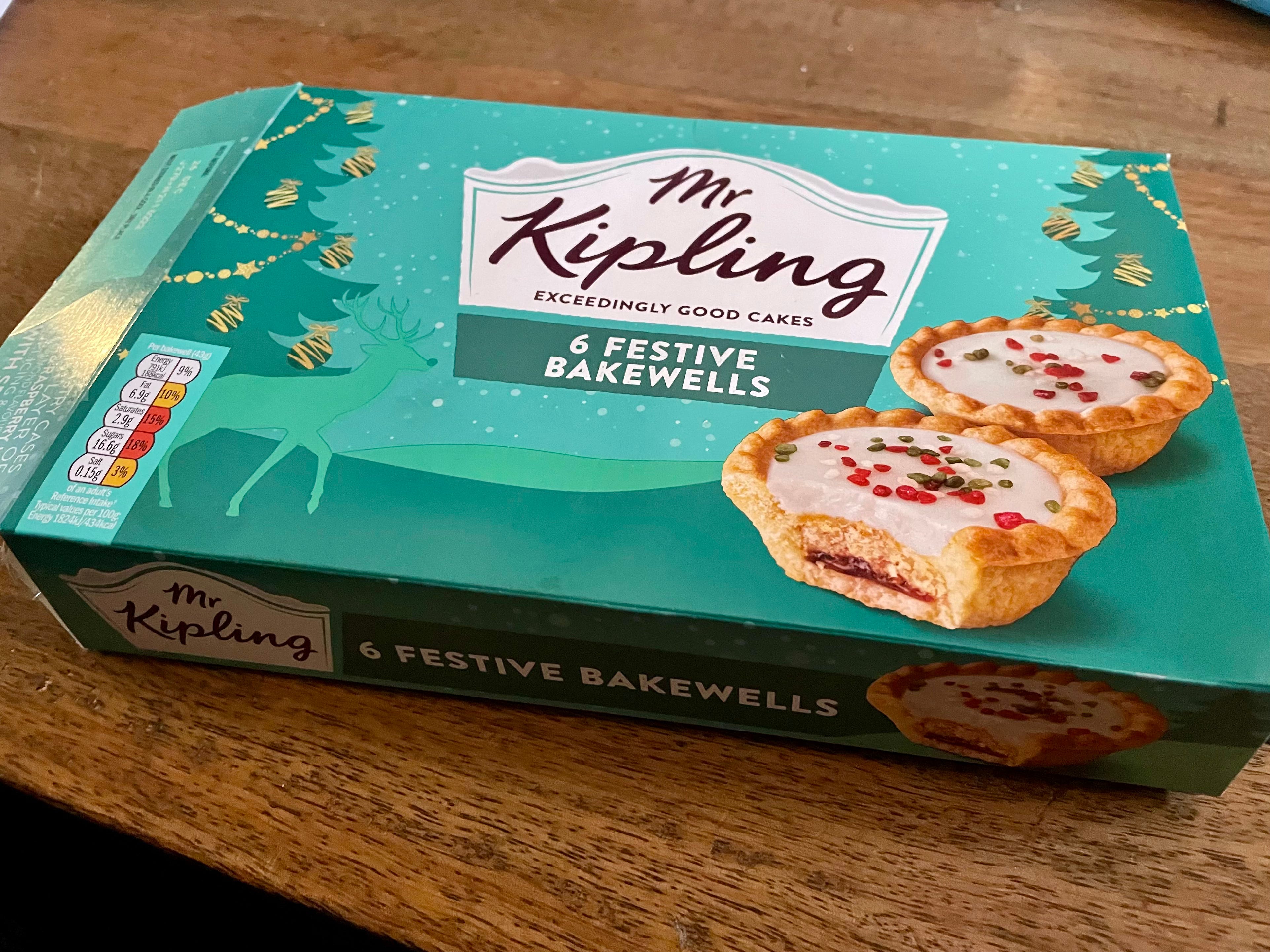
I’m also eating far too many of these wee bits of heaven. I know Christmas is supposed to be about mince pies, and a good mince pie is a thing of beauty. But a good mince pie is also exceptionally rare. These, on the other hand, are always reliable, and bloody delicious.
Things I’ve created:
As a comms consultant, I’m creating stuff every day, but to stop this being a list of work things, I’ve picked two of my favourites.
The first was a highly segmented email campaign for a client.
Know your audience, know your audience, know your audience. In comms, we know this, but the reality is that it can hard to deliver a truly audience-focused campaign. My work is with charities and non-profits, with small, stretched teams carrying out multiple functions across the comms/marketing matrix, with competing priorities and a bunch of urgent demands.
Where I can (hopefully) add value is to take a step back, to ask annoying questions about purpose and what keeps people awake at night, and then try to find ways to cut through that internal and external noise. Most recently, this was for a client who wanted to know more about their wider email list, so as to target them with more compelling comms. Through segmentation and behaviour-mapping, I created a campaign that spoke to a particular audience, and the results have been encouraging. Against a starting open rate of around 30% and a click-through of 4%, this particular campaign has seen rates of 75% and 55% respectively, and that’s not skewed by tiny list numbers.
Overall, I’ve managed to bring the wider list open rate up by 28% and the click-through by a crazy 99%. I’d love to take full credit, but I can’t - it’s working with a wonderful team who are up for a challenge. But it’s also been gratifying to see a strategy come to life in the real world.
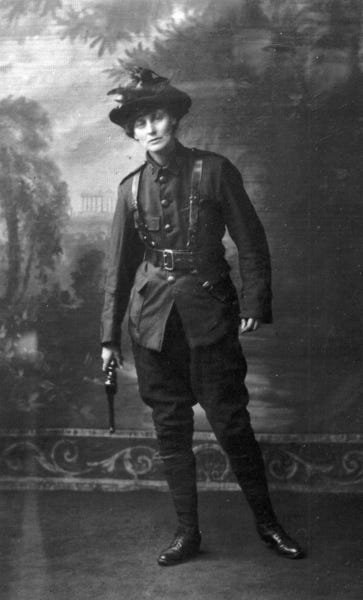
As I said at the start, I’ve also created some more of my book about Constance Markievicz, the first female MP elected to the House of Commons, and one of the most fascinating women in modern British and Irish history. It’s a story of how she’s been systematically forgotten by the establishment, and it’s been a passion project for a long time. I’ve been writing it and researching it for a while, and I’m now at the stage where I am ready to show some people my work. It’s so interesting to me how different it feels to get feedback on a project like this than in my professional projects. In this scenario, it feels incredibly vulnerable and exposing to share my writing, and yet, in both situations, feedback makes everything better. Very grateful to my wonderful friend and Viking expert Eleanor Barraclough, whose book was shortlisted for the Wolfson Prize earlier this month, for taking a look at some early drafts.
So that’s it. That’s what’s been on my plate the last few weeks. If I were the Guardian, I might try to make some meta point about how we are what we consume, but I’ve taken the batteries out of my Pretentious-o-meter to use for Christmas toys. So perhaps I’ll leave it with a gentle call for recommendations: low, middle or high-brow things to consume are all very much welcome.
Til then, have a great Christmas and see you back here in 2026.